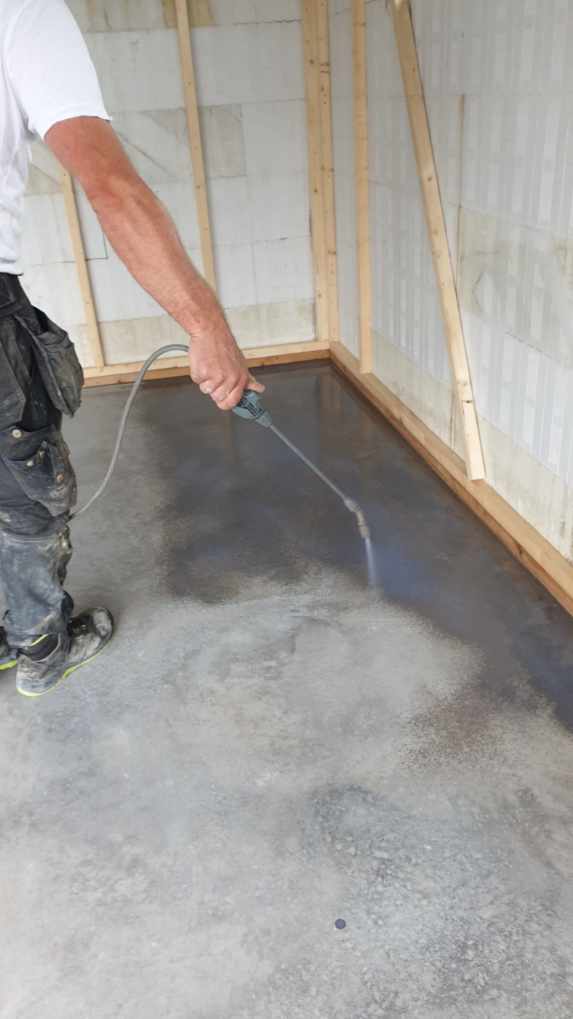
Comparison of Concrete Hardeners, Concrete Densifiers
CONCRETE HARDENER
· Comparison of CONCRETE HARDENERS/DENSIFIERS
· Sodium (N) Potassium (K) Lithium (Li) Silicates and Nano Silica · Sodium (N) Potassium (K) Lithium (Li) Silicates
· Developed in the 1930s (N&K) and late 1990s (Li)
· Used to penetrate and harden concrete
· Largest molecular ion size prevents deep penetration providing deepest (4-5 mm)
· Varying degrees of reactive “Sites” provide low to moderate chemical reaction and bonding time
· Water soluble (N&K) causes expansion/contraction in Wet/Dry cycles. Li is insoluble and remains stable
· Very corrosive, increases the pH of the concrete to (pH 11-13)
· Not good for sealing concrete
· Generates corrosive, gelatinous slurry that must be scrubbed away and disposed of as hazardous waste
· Requires continuous stirring and scrubbing to create any reaction with concrete.
· May contribute to sweating and white deposits (N&K)
· Requires dwell time
· Nano-Silica Concentrated dispersion of Nano-silica in water
· Developed in the 2000s
· Penetrates and hardens concrete to increase abrasion resistance. ✓ Available

